

Breast cancer is a complex disease, and one of the most important factors in understanding it is examining hormone receptors—specifically the oestrogen receptor in breast cancer. These receptors guide doctors in choosing the most effective treatment and predicting how the cancer is likely to behave.
In this blog, we explore what oestrogen receptors (ER) and progesterone receptors (PR) are, their significance, what it means if they are present or absent, and how HER2 fits into the picture.
What Is the Oestrogen Receptor in Breast Cancer?
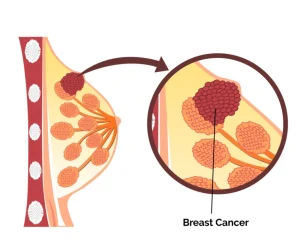
The oestrogen receptor in breast cancer refers to a protein found inside or on the surface of certain breast cancer cells. These receptors allow cancer cells to use the hormone oestrogen as fuel to grow and multiply.
If a tumour contains these receptors, it is called ER-positive. If not, it is ER-negative.
Understanding ER status is crucial for determining treatment, especially hormone-blocking therapies.
Significance of ER Positivity and ER Negativity
- ER-Positive Breast Cancer
When a tumour is ER-positive, it means:
- The cancer grows in response to oestrogen.
- Treatments that block oestrogen—such as tamoxifen, aromatase inhibitors, or ovarian suppression—can significantly slow or stop cancer growth.
- It tends to grow more slowly than ER-negative cancer.
- Long-term hormone therapy often improves outcomes.
In general, ER-positive breast cancer is considered more treatable due to effective hormone-targeted therapies.
- ER-Negative Breast Cancer
If the tumour is ER-negative, then:
- Oestrogen does not fuel the cancer.
- Hormone therapy is not effective.
- Other treatments like chemotherapy, targeted therapy, or immunotherapy are considered instead.
- ER-negative tumours may grow more rapidly and be more aggressive.
What Are ER and PR Receptors?
ER (Oestrogen Receptor)
- Indicates sensitivity to the hormone oestrogen.
PR (Progesterone Receptor)
- Indicates sensitivity to progesterone.
- PR status often reflects how functional the ER pathway is, since progesterone production is influenced by oestrogen.
Cancer can be:
- ER+ / PR+
- ER+ / PR-
- ER- / PR+ (rare)
- ER- / PR-
Which Condition Is Considered Better—ER Positive or PR Positive?
In general:
- Being ER-positive is more significant for treatment decisions.
This is because ER status more strongly predicts whether hormone therapy will work. - ER+ / PR+ cancers have the best response to hormone therapy.
- ER+ / PR- cancers still benefit from hormone treatment but may have slightly more aggressive behaviour.
- PR positivity alone without ER positivity is uncommon and may not respond as well to hormone-blocking drugs.
So, ER-positive status is generally considered the most favourable.
What Is HER2 and Why Is It Important?
HER2 (Human Epidermal Growth Factor Receptor 2) is another type of receptor that influences cancer growth. Unlike ER or PR, HER2 is not hormone driven.
HER2-Positive
- Cancer cells have too many HER2 receptors.
- These tumours grow faster and can be more aggressive.
- However, they respond extremely well to targeted HER2 therapies like trastuzumab.
HER2-Negative
- Cancer cells are not driven by HER2.
- Treatment depends more on ER/PR status and tumour characteristics.
HER2 status, combined with hormone receptor status, determines the subtype of breast cancer and the best treatment plan.
Final Opinion
The oestrogen receptor in breast cancer plays a central role in understanding how a tumour behaves and how best to treat it. ER and PR testing—along with HER2—allows doctors to tailor treatment with precision.
In most cases, ER-positive breast cancer offers more treatment options, especially hormone-targeted therapies that can reduce recurrence and improve outcomes. Meanwhile, HER2-positive cancers—though aggressive—also have effective targeted treatments.
Understanding these receptors empowers patients to make informed decisions and gives clinicians a clear roadmap to personalized care.
FAQ
1. What does it mean if my breast cancer is ER-positive?
It means the tumour uses oestrogen to grow and is likely to respond well to hormone-blocking treatments.
2. Can ER-negative breast cancer be treated with hormone therapy?
No. ER-negative tumours do not rely on oestrogen, so hormone therapy is not effective.
3. What is the difference between ER and PR?
ER refers to oestrogen receptors; PR refers to progesterone receptors. Both indicate how hormones affect the cancer.
4. Is HER2-positive breast cancer more dangerous?
It can be more aggressive, but modern HER2-targeted treatments have significantly improved outcomes.
5. Which is better: ER-positive or ER-negative?
ER-positive breast cancer is generally more favourable because it responds well to hormone therapies.